The Men Protecting the King

simon klingert nuristan 1 The Men Protecting the King Simon Klingert

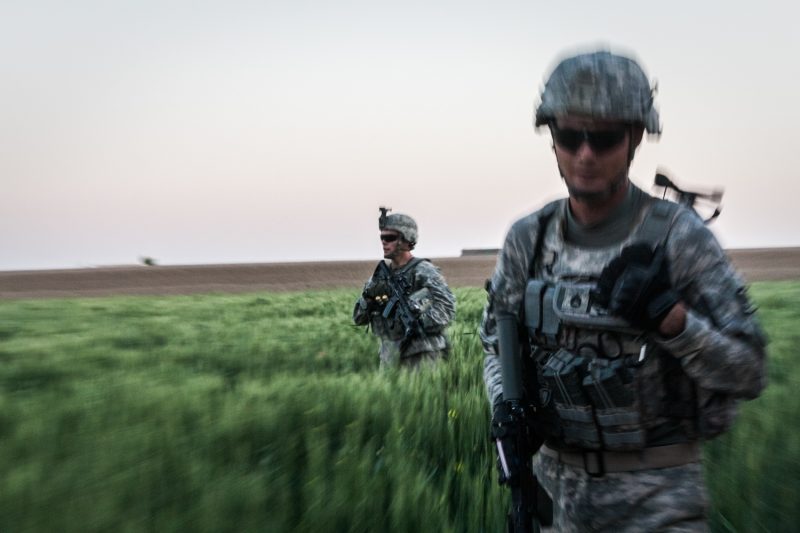
Afghan National Army (ANA) soldiers get ready to move out as they patrol a village in the Nurgaram district of Nuristan province, Afghanistan. (c) Simon Klingert

We stopped about twenty minutes into the patrol and took cover behind a neatly build stonewall. It  followed the single path that provided passage through this rugged valley somewhere in southern Nuristan.

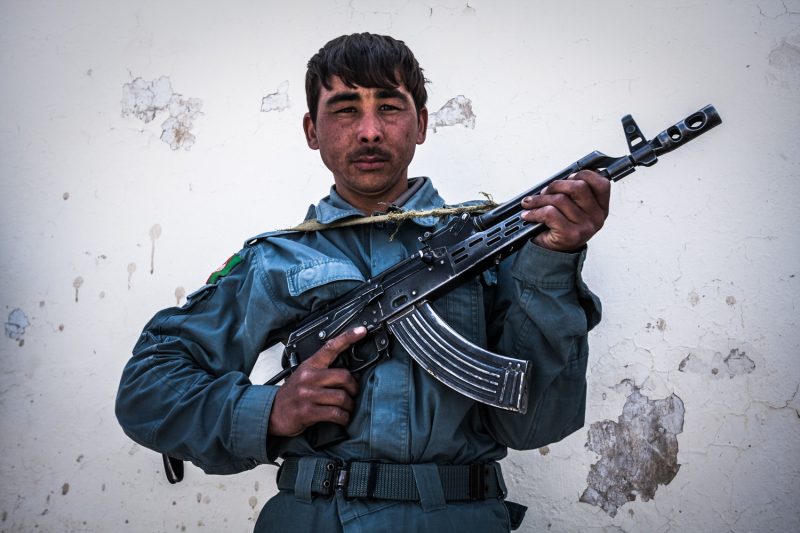
“You see him?” one of the Afghan soldiers asked me, pointing to one of his peers, a man of medium height with blond hair, a thick beard and crystal-blue eyes. Said man with the odd European features now rested in the shade of a tree a few meters down the path.

“He is from Nuristan. He and his family are descendants of Alexander the great” the Afghan soldier said to the interpreter by my side. Two or three Afghan soldiers, who had joined us to take a peek at the foreign reporter nodded in agreement.

The incredulous smile on my face must have revealed my skepticism, but it only strengthened their resolve convincing me it was all true.

“See his blue eyes? He just looks like you.” one of them said, as if this was the ultimate clue I had somehow missed. Or was he just trying to take me for a ride?

It seemed it wasn’t the first time the Nuristani was confronted with this folksy legend. The ignorance of his fellow Pashtun and Tajik soldiers amused him, or he had simply grown tired explaining to them that his looks and features weren’t that uncommon in Nuristan.

He just smiled knowingly.

Share this stuff. 2 clicks required to protect your privacy.

So How Often Do The Taliban Attack?

The International Security Assistance Force (ISAF) announced it won’t continue publishing the number of security related incidents, as it had regularly done until recently. There has been some debate over how meaningful those numbers as a metric were (I have written on this subject before), but the timing as well as the rationale behind this step is telling.

Anthony Cordesman, who has for years criticized the way the coalition has dealt with metrics and related figures sums up the context of this decision:

“Basically speaking, we’ve ended up – after the surge and three more years of fighting – with absolutely nothing that we can tell ourselves that shows the level of progress we did or did not achieve” 

The AP’s Robert Burns has the details.

Share this stuff. 2 clicks required to protect your privacy.

Flying in Afghanistan, You Get To See The Cockpit

simon klingert afghanistan bagram 01 Flying in Afghanistan, You Get To See The Cockpit Simon Klingert

A little gem from the archives: cockpit view of a Presidential Airways (Blackwater/ Xe/ Academi) operated CASA-212 medium transport aircraft on its final approach to Bagram Airfield, Parwan province, Afghanistan, August 2007. Presidential Airways maintains a sizable fleet of helicopters and aircraft in Afghanistan to provide air transport for coalition forces, such as this flight from Forward Operating Base Salerno to Bagram Airfield. (c) Simon Klingert

Share this stuff. 2 clicks required to protect your privacy.

Hanging out and staying alive with the Afghan Army

Gula Jan, the Afghan Sergeant broke the gluttonous silence. He had successfully completed an ANA drill instructor course and was allowed to move around forward operating base Orgun-E, a nearby U.S. military base unescorted with his weapon.

“So tell us, are you afraid being out here with us?” he asked me. He was flanked by his two senior aides, and all three had a mischievous smile on their tanned faces. Even the U.S.-hired Afghan interpreter couldn’t help but smiling as he translated their words.

They had nailed me. Tell them yes and you’ll lose whatever respect they may have for you. Answer no and they will mockingly bring up the ungraceful facial expression you made in the bunker earlier in the afternoon.

Read the rest of this story at republicofsnarkistan.net and stay tuned for part II, which will follow soon.

Share this stuff. 2 clicks required to protect your privacy.

Take A Virtual Tour of a Combat Outpost in Afghanistan

The tide of the Afghan war and the military engagement of NATO’s armies is perhaps best exemplified by the number of combat outposts (COPs). At the height of the surge in 2011, several hundred of those outposts dotted the Afghan landscape, often placed in remote and unforgiving terrain. As the Afghan war winds down, most of them are either being dismantled or handed over to the Afghan National Security Forces.

simon klingert afghanistan photo 01 Take A Virtual Tour of a Combat Outpost in Afghanistan  Simon Klingert

A U.S. Army officer and an interpreter stand close to a wall made of Hesco barriers during an insurgent rocket attack on forward operating base (FOB) Munoz in the Gajan district of Paktika province, Afghanistan, June 12, 2009. At the time this base was subjected to daily rocket and mortar attacks, but the range of the single 60 mm mortar tube and the 40 mm grenade launchers was too low to allow for effective counter-fire missions.

I stitched together some photos for a virtual tour of FOB Munoz in Paktika province, Afghanistan. Read the story and click the link to learn about life on this outpost.

FOB Munoz was built adjacent to the Gajan district center by U.S. special forces, who mentored elements of the Afghan National Police (ANP). The base was designed to house up to hundred personnel and was labeled a forward operating base (FOB) rather than a combat outpost.

Yet at some point the special operators moved on, leaving the base in the hands of the ANP and a hired local guard force. Threats in the form of Taliban night letters to the families of the guards and the ANP lead them to abandon the post soon after the special forces had left. Continue reading

Share this stuff. 2 clicks required to protect your privacy.

U.S. Troops in Haqqani Territory: Can You Spot Them?

simon klingert paktika e1362697893526 U.S. Troops in Haqqani Territory: Can You Spot Them? Simon Klingert

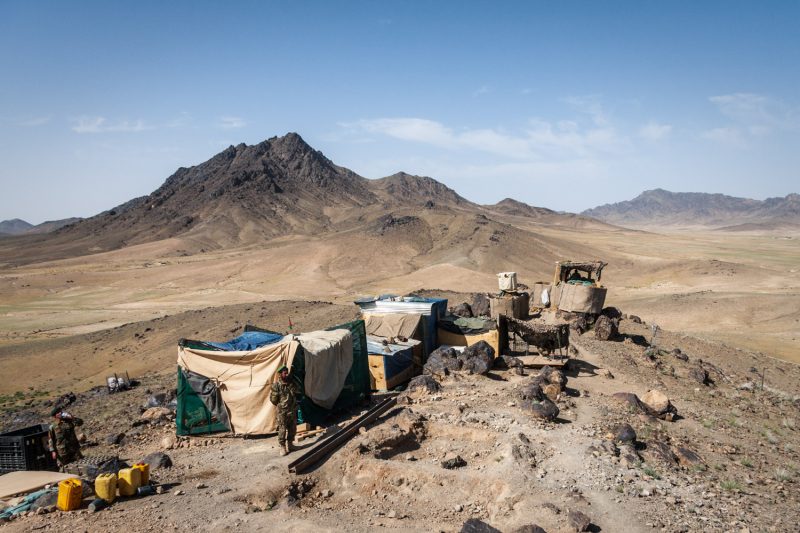
U.S. troops provide overwatch during Operation Azoodee Thunder on a hilltop near the Shah-i-Kot Valley in Zormat district, Paktiya province, Afghanistan, June, 2009. (c) Simon Klingert

Click on the image for the fully-immersive experience.

In the early summer of 2009, U.S. Army troops mounted a series of Battalion-size joint operations in Paktiya province with their partners among Afghan National Army. Along with the neighboring provinces of Khost and Paktika, Paktiya is what Haqqani network commanders consider their home turf.

The photo above shows a group of U.S. soldiers manning a blocking position designed to intercept any insurgent who may try to escape the Afghan Army sweeping the villages in the valley below.

I spent a week with the soldiers on that hilltop. No insurgent came by; they had all either left or filtered back into the population long before the operation had begun.

Share this stuff. 2 clicks required to protect your privacy.

The ANA are fighting the war their very own way

Afghanization isn’t just a buzzword. It’s happening on the ground as well. Now that NATO members have begun withdrawing their troops the Afghan National Army needs to step up. And in some places they’re doing just that.

Writer Luke Mogelson follows an ANA unit as they penetrate a hostile valley in Chak district. It’s an unruly place in Wardak province, about 80 kilometers southwest of Kabul. He finds that this particular unit has managed to adapt quite well to fighting the war without U.S. counterparts at their side.

Telling the difference between civilians and insurgents is a key challenge for any counterinsurgent. The U.S. military uses biometric scanners and other hi-tech gear to collect information. The Afghan battalion commander has found a low-tech solution that seems to be working just as well, sort of.

Daowood’s method was different. When a fighting-age male struck him as suspicious, the colonel would use his thumbs and index fingers to pull open both of the man’s eyelids. Then he would lean close and stare searchingly. Usually, after several seconds, as though he had suddenly found precisely what he was looking for, Daowood would declare, in mock surprise, “He’s Taliban!”

If you really want to know how the transition plays out on the ground, read this piece.

Share this stuff. 2 clicks required to protect your privacy.